Over a decade ago, a white paper circulated quietly among cryptography enthusiasts. Penned under the pseudonym Satoshi Nakamoto, it proposed something radical — a peer-to-peer digital currency untethered from banks or governments. Few could have predicted then that this experiment, dubbed Bitcoin, would ignite a financial and cultural phenomenon, challenging centuries-old notions of money, trust, and value itself.
The Genesis of Bitcoin: A Vision for Decentralization
Bitcoin was born out of the ashes of the 2008 financial crisis, a time when trust in traditional financial institutions reached an all-time low. Nakamoto’s vision was elegantly simple yet profoundly disruptive: a currency governed not by central banks but by mathematics and consensus. By harnessing blockchain technology, Bitcoin introduced a way for strangers across the globe to transfer value securely without intermediaries.
At its core, Bitcoin relies on:
Blockchain: A distributed, immutable ledger recording every transaction.
Mining: A process where powerful computers solve complex puzzles to validate transactions and secure the network.
Scarcity: A finite supply capped at 21 million coins, mimicking precious metals like gold.
Bitcoin as Digital Gold: Store of Value or Speculative Frenzy?
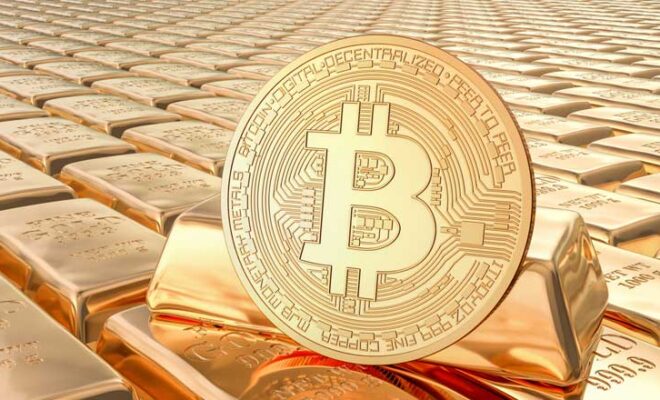
Proponents often liken Bitcoin to gold — not as a currency for daily spending but as a hedge against inflation and economic instability. Its scarcity and decentralization make it resistant to the whims of governments or central banks. In nations facing hyperinflation, Bitcoin has offered a lifeline, allowing people to preserve wealth in a form untouchable by local authorities.
Limited Supply: Unlike fiat currencies, Bitcoin’s supply cannot be inflated.
Portability: Millions in value can be transferred across borders with a simple private key.
Security: The blockchain’s design makes counterfeiting virtually impossible.
Yet, critics argue that Bitcoin’s wild price swings undermine its credibility as a stable store of value. Its market has experienced dramatic booms and busts, luring speculators while deterring cautious savers.
Bitcoin as a Medium of Exchange: Reality or Myth?
While Bitcoin’s white paper envisioned it as a “peer-to-peer electronic cash system,” its adoption as everyday money remains limited. High transaction fees and slow processing times, especially during network congestion, have hindered its practicality for daily purchases.
Nonetheless, progress persists:
Layer 2 Solutions: Innovations like the Lightning Network aim to enable instant, low-cost transactions by settling smaller payments off-chain.
Growing Acceptance: A growing number of merchants — from small businesses to major online retailers — now accept Bitcoin, though volatility remains a barrier.
Cross-Border Payments: For remittances, Bitcoin can circumvent high fees imposed by traditional money transfer services.
The Investor’s Perspective: Risk and Reward
For many, Bitcoin is less a currency and more an investment vehicle. Institutional investors, once dismissive, have begun allocating capital to Bitcoin, viewing it as an uncorrelated asset in a diversified portfolio.
Potential advantages for investors include:
Portfolio Diversification: Bitcoin’s price movements do not always align with traditional markets.
Hedge Against Inflation: In an era of expansive monetary policy, some see Bitcoin as a modern safeguard against currency debasement.
Liquidity: Major exchanges operate 24/7, offering constant access to buyers and sellers worldwide.
Yet, Bitcoin’s price is notoriously volatile. Sharp drops of 30% or more in days or weeks are not uncommon. Investors must weigh this volatility against their risk appetite, time horizon, and belief in Bitcoin’s long-term thesis.
Bitcoin and Regulation: An Evolving Landscape
As Bitcoin’s popularity has surged, so too has regulatory scrutiny. Governments grapple with questions of taxation, anti-money laundering, and investor protection. Some nations have embraced Bitcoin with open arms, while others have imposed outright bans.
Key regulatory trends include:
Taxation: Many countries classify Bitcoin as property, imposing capital gains taxes.
Central Bank Digital Currencies (CBDCs): Some governments, inspired by Bitcoin’s technology, are exploring their own state-backed digital currencies — a curious twist on Nakamoto’s vision.
The Criticisms: Environmental Concerns and Beyond
No discussion of Bitcoin is complete without acknowledging its controversies. Chief among them is its environmental footprint. Bitcoin mining consumes vast amounts of electricity, rivaling that of entire nations. Critics argue this is unsustainable, especially as climate concerns mount globally.
In response, some miners are transitioning to renewable energy sources. Others advocate for alternative consensus mechanisms that maintain security without the same energy demands.
The Cultural Impact: More Than Just Money
Bitcoin’s influence extends far beyond finance. It has given rise to a broader movement championing decentralization and individual sovereignty. It inspired the birth of thousands of other cryptocurrencies, each experimenting with novel features and use cases — from decentralized finance (DeFi) to non-fungible tokens (NFTs).
Moreover, Bitcoin has sparked profound questions: What is money? Who should control it? Can trust be programmed rather than enforced? These debates continue to ripple through boardrooms, classrooms, and legislative halls.
Looking Ahead: The Road to Maturity
What lies ahead for Bitcoin? Its future is anything but certain. It may become a permanent fixture of global finance, a digital equivalent of gold safeguarding wealth across borders and generations. Or it may fade into history as a bold experiment, overtaken by technological successors or undone by its own challenges.
What is clear is that Bitcoin has forced the world to rethink money in the digital age. Its journey from obscure cryptographic curiosity to household name is a testament to the power of ideas — and the human desire for freedom, privacy, and self-determination.
Conclusion: Bitcoin’s Enduring Legacy
In the end, Bitcoin’s greatest contribution may not be its price or its market capitalization but its role as a catalyst. It has opened minds to the possibilities of decentralized systems, digital scarcity, and peer-to-peer value exchange on a global scale. Whether one views it as digital gold, speculative mania, or the first draft of a new monetary era, Bitcoin has carved out a place in history — one block at a time.