Day Trading vs. Swing Trading Crypto: Which Style Fits Your Personality?
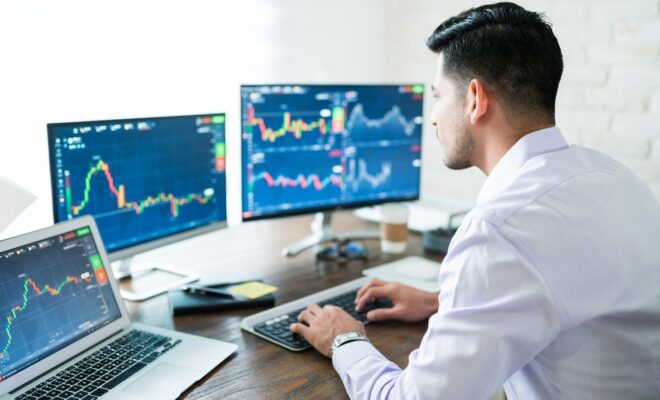
The continuous, borderless architecture of the cryptocurrency market has democratized access to financial speculation on a global scale. Unlike traditional stock exchanges that close at the end of the business afternoon, digital asset networks operate twenty-four hours a day, seven days a week. This non-stop market environment creates an abundance of price fluctuations, offering unique opportunities for short-term market participants. However, navigating this volatile landscape requires a clear operational strategy.
Two dominant trading methodologies have emerged for individuals looking to capitalize on crypto price movements: day trading and swing trading. While both approaches aim to extract consistent profits from the market, they operate on completely different time horizons, require distinct technical skill sets, and place vastly different psychological demands on the individual. Choosing the wrong strategy can lead to rapid capital depletion and extreme emotional exhaustion. To determine which methodology aligns with your financial goals, you must analyze the core mechanics of each style, evaluate their respective operational demands, and honestly assess your unique personality traits.
The Intense World of Crypto Day Trading
Day trading is a high-velocity style where a participant enters and exits multiple financial positions within a single twenty-four-hour window. The fundamental rule of a pure day trader is that no trading positions are held overnight. Every open order is systematically liquidated before the trader concludes their work for the day, ensuring that they sleep with a pure cash or stablecoin balance.
Execution Speed and Intraday Charting
Day traders look for micro-trends on granular timeframes, analyzing price movements using one-minute, five-minute, and fifteen-minute charts. They utilize specialized tools such as order flow dynamics, volume profile analysis, and real-time market depth indicators to identify brief imbalances in supply and demand. A day trader might enter a position simply because a large buying order has entered the exchange order book, expecting a swift price increase over the next ten minutes, and exit the moment that specific buying momentum slows down.
High Capital Turn and Micro-Profits
Because day traders target very small percentage movements, often capturing gains of less than one or two percent per transaction, they rely on high frequency and position sizing to accumulate meaningful daily revenue. This style requires a massive investment of time and focused attention. A day trader must sit directly in front of multiple monitors during their active hours, constantly scanning tickers, monitoring social feeds for breaking industry news, and managing active orders. There is no room for distraction; a slight delay in clicking a button can transform a winning position into a significant loss.
The Calculated Horizon of Swing Trading
Swing trading takes a more patient, macroeconomic approach to the digital asset market. A swing trader seeks to capture larger price movements, often referred to as swings, that develop over several days, weeks, or even months. This methodology acknowledges that asset prices rarely move in a straight line; instead, they progress in waves of upward impulses and downward corrections.
Multi-Day Technicals and Fundamentals
Swing traders focus their analysis on higher-timeframe charts, relying heavily on four-hour, daily, and weekly price candles. They spend time identifying major horizontal support and resistance zones, structural chart patterns like ascending triangles, and sweeping trend lines.
Furthermore, swing trading allows for the integration of fundamental analysis. A swing trader will evaluate upcoming network upgrades, protocol governance votes, macroeconomic liquidity shifts, or pending regulatory decisions, positioning themselves days in advance of the actual catalyst to capture the broader structural shift.
Lifestyle Flexibility and Reduced Activity
The primary appeal of swing trading is its operational flexibility. Because positions develop over extended periods, a swing trader does not need to stare at price tickers all day long. They can comfortably conduct their research during evening hours, establish automated entry and exit orders, and allow the market to unfold while they attend to regular career or family obligations. This style prioritizes high-quality, calculated setups over high-frequency execution.
Direct Comparison of Operational Realities
To help visualize how these two styles contrast across critical logistical and performance metrics, look at the fundamental operational requirements.
| Operational Metric | Day Trading Crypto | Swing Trading Crypto |
| Average Holding Time | Minutes to hours; never overnight | Days to multiple weeks |
| Primary Chart Timeframes | 1-minute, 5-minute, 15-minute | 4-hour, Daily, Weekly |
| Daily Time Commitment | 6 to 10 hours of active screen monitoring | 1 to 2 hours of evening research |
| Transaction Fee Friction | Extremely high due to trade frequency | Nominal; minimal impact on net returns |
| Overnight Risk Profile | Zero exposure to nocturnal market crashes | Vulnerable to unexpected weekend news |
Psychological Profiles: Matching Strategy to Mindset
Your ultimate success in the digital asset market depends far less on finding a perfect technical indicator and far more on selecting a strategy that matches your psychological wiring. If you force your mind into a trading style that triggers cognitive friction, emotional biases will inevitably override your risk management rules.
The Ideal Day Trading Personality
To survive the intense environment of day trading, an individual must possess exceptional emotional detachment and lightning-fast decision-making capabilities. You must be comfortable with ambiguity and willing to accept frequent small losses without experiencing frustration or a desire for revenge trading.
Day trading fits personalities that thrive on immediate feedback, possess intense focus, and prefer to keep their work confined to specific daily hours. If the idea of leaving a financial position open while you sleep causes you immediate anxiety, the definitive closure of day trading may fit your psychology.
The Ideal Swing Trading Personality
Swing trading demands an abundance of patience, emotional discipline, and a capacity for long-term strategic thinking. A swing trader must possess the psychological fortitude to watch an open position experience temporary pullbacks without panicking and closing the trade prematurely.
This style suits analytical minds that enjoy deep research, appreciate broad economic trends, and prefer a calm, deliberate workflow over high-stress environments. If you tend to overthink rapid developments or find your emotional stability disrupted by constant intraday price noise, swing trading offers a healthier, more sustainable path.
Mitigating Style-Specific Risks in Crypto
Regardless of whether you choose to operate as a day trader or a swing trader, the baseline volatility of the cryptocurrency ecosystem requires a strict defensive strategy to ensure capital preservation.
-
Managing Overnight Exposure: For swing traders, the primary hazard is overnight and weekend risk. Because crypto networks never close, a catastrophic protocol exploit, a major exchange insolvency, or an unexpected international regulatory ban can occur while you are completely detached from your devices. To insulate your portfolio from these sudden macro shocks, you must utilize hard, automated stop-loss orders left directly on the exchange architecture. These orders act as insurance policies, liquidating your position at a predefined boundary if a sharp market retreat occurs.
-
Controlling Transaction Fee Attrition: For day traders, the silent killer of profitability is trading fee friction. Cryptocurrency exchanges collect percentage-based maker and taker fees on every executed order. Because a day trader executes hundreds of transactions over a single month, these nominal fees compound into massive expenses that can easily wipe out a substantial portion of your gross trading profits. Day traders must actively look for high-volume discount tiers, utilize exchange utility tokens to lower transaction costs, and limit their trading activity strictly to periods of peak market liquidity where price spreads are thinnest.
Frequently Asked Questions
How does the bid-ask spread affect day traders differently than swing traders?
The bid-ask spread is the difference between the highest price a buyer is willing to pay and the lowest price a seller is willing to accept for an asset. In highly liquid markets, this spread is fractions of a cent, but in low-liquidity conditions or volatile periods, it can widen significantly. For a day trader targeting tiny intraday profit margins, entering and exiting through a wide bid-ask spread introduces substantial slippage that can instantly turn a potentially profitable trade into a net loss. For a swing trader targeting massive multi-day percentage movements, the localized spread has a negligible impact on their overall trade economics.
Can I effectively day trade cryptocurrency using only a mobile phone application?
Day trading successfully using exclusively a mobile phone interface is virtually impossible and highly discouraged. Professional day trading requires instant access to advanced charting software, real-time order book ladders, multiple simultaneous monitor views, and rapid order execution hotkeys. Mobile connections introduce cellular latency delays, and small screens limit your ability to view broader technical data structures accurately, leaving mobile-only users at a massive structural disadvantage against institutional algorithms and desktop-equipped market participants.
What is funding rate risk, and which trading style does it impact?
Funding rates are periodic payments exchanged between long and short traders in the cryptocurrency perpetual futures market to keep the contract price pegged to the spot index price. If the market is overwhelmingly bullish and you hold a leveraged long position, you will be forced to pay a funding fee to short sellers every few hours. This holding cost directly impacts swing traders, as a high funding rate can systematically erode their profit margins over multiple weeks. Day traders are rarely impacted by funding rates since they routinely open and close their positions entirely between funding payment intervals.
How do wash trading practices on unregulated exchanges distort intraday volume indicators?
Wash trading occurs when an entity simultaneously buys and sells the exact same digital asset to create a false impression of heavy market activity. On certain lesser-regulated digital asset exchanges, wash trading can artificially inflate the volume bars shown on short-term charts. This manipulation severely misleads day traders, who might interpret the fake volume as genuine institutional interest and enter a flawed trade. Swing traders are insulated from this deception because they base their decisions on higher daily or weekly timeframes, where organic macroeconomic trends are far harder to distort through localized order book manipulation.
Should a beginner start with day trading or swing trading first?
Beginners should almost universally start with swing trading. The slow pace of higher timeframe charts allows a novice investor ample time to conduct deep research, practice technical analysis without extreme time pressure, and digest market developments calmly. Day trading exposes unseasoned participants to intense emotional triggers, high-frequency commission drains, and predatory high-frequency algorithms, which frequently results in total capital liquidation within their first few weeks of active trading.
How does market capitalization alter the selection of assets for day trading versus swing trading?
Day traders require massive, continuous liquidity and tight spreads, restricting their trading universe almost exclusively to mega-cap digital assets like Bitcoin and Ethereum. Attempting to day trade a low-market-cap token can result in getting trapped in an illiquid position during a sharp selloff. Swing traders have a wider selection; because they operate over weeks, they can safely allocate capital to medium-cap tokens that exhibit strong fundamental growth or structural accumulation patterns, as they have ample time to build and exit positions without distorting the local asset price.