Bitcoin: The Digital Gold Reshaping the Financial Frontier

Introduction: The Rise of a Monetary Revolution
In little more than a decade, Bitcoin has evolved from an obscure idea circulated on cryptography mailing lists to a trillion-dollar asset class commanding the attention of governments, banks, and individual investors worldwide. Its journey has been anything but linear, marked by staggering volatility, fervent debates, and growing mainstream adoption. But beyond the headlines and price swings lies a profoundly transformative force: a decentralized, peer-to-peer financial system unshackled from traditional intermediaries.
As the world grapples with inflation, political instability, and shifting power dynamics, Bitcoin’s relevance continues to grow. It is no longer merely a speculative asset; for many, it represents freedom, security, and a hedge against an increasingly uncertain financial future.
What Is Bitcoin? A Brief Primer
Bitcoin is a digital currency, or cryptocurrency, that operates without a central authority. It was introduced in 2008 through a whitepaper titled “Bitcoin: A Peer-to-Peer Electronic Cash System”, authored by the pseudonymous Satoshi Nakamoto. Its primary innovation lies in the use of blockchain technology—a public, immutable ledger that records all transactions across a distributed network of computers.
Unlike fiat currencies such as the US dollar or euro, Bitcoin is not issued by a government. Instead, it is “mined” through a computational process involving powerful hardware and complex algorithms. The total supply of Bitcoin is capped at 21 million coins, a limit coded into its software to ensure scarcity.
Key Features That Set Bitcoin Apart
-
Decentralization: No single entity controls Bitcoin. Its operations are maintained by a global network of nodes that validate transactions through a consensus mechanism known as Proof of Work.
-
Scarcity: The fixed supply of 21 million coins introduces a deflationary model, making Bitcoin resistant to inflation.
-
Security: Bitcoin’s blockchain is one of the most secure digital systems in existence, thanks to its decentralized nature and cryptographic underpinnings.
-
Transparency: Every transaction is publicly recorded on the blockchain, allowing for complete auditability.
-
Pseudonymity: While transactions are visible, they are not directly tied to individuals, offering a degree of privacy uncommon in traditional financial systems.
Bitcoin as Digital Gold: A Store of Value for the 21st Century
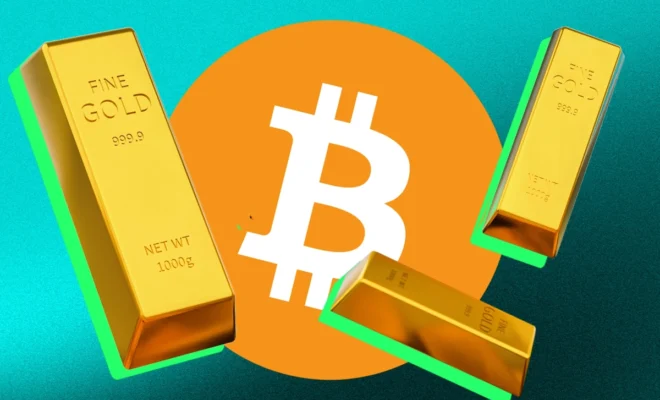
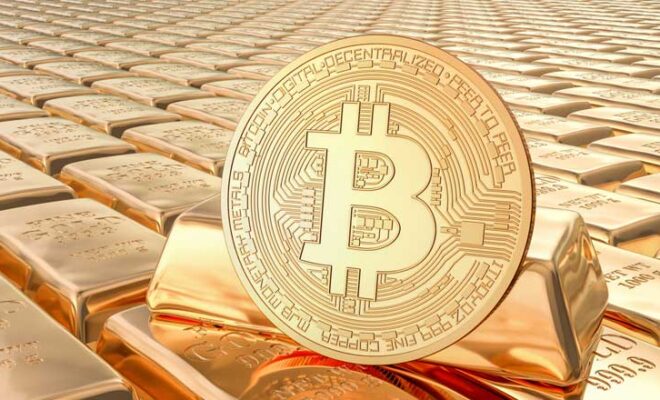
The comparison between Bitcoin and gold is not merely metaphorical. Like gold, Bitcoin is scarce, durable, and divisible. Yet it offers significant advantages in terms of portability, verifiability, and ease of transfer. These attributes have led many to refer to Bitcoin as “digital gold,” especially as a store of value in times of economic uncertainty.
In countries with hyperinflation or oppressive capital controls, Bitcoin has emerged as a financial lifeline. From Venezuela to Nigeria, individuals have used it to preserve wealth, send remittances, or engage in commerce when local currencies failed them. The ability to hold an asset that cannot be debased by a central bank is increasingly viewed as not just convenient, but essential.
The Institutional Embrace
In the early years, Bitcoin was often dismissed as a tool for criminals or a bubble destined to burst. Today, major financial institutions like Fidelity, BlackRock, and Goldman Sachs have either launched Bitcoin products or integrated digital assets into their offerings. Publicly traded companies such as MicroStrategy and Tesla have allocated billions into Bitcoin as part of their treasury management strategies.
This shift signals a broader legitimization of Bitcoin within the financial ecosystem. It also paves the way for more regulatory clarity, deeper liquidity, and increased investor confidence.
Challenges and Criticisms
Despite its many strengths, Bitcoin is not without controversy. Its energy consumption has drawn criticism from environmental groups, especially as mining operations often rely on fossil fuels. However, recent trends show a growing shift toward renewable energy sources among miners.
Volatility remains a double-edged sword. While it attracts traders and offers high potential returns, it also discourages some from viewing Bitcoin as a reliable medium of exchange. Moreover, the pseudonymous nature of transactions, though not inherently illicit, has raised concerns among regulators.
Bitcoin’s scalability has also been debated. The network can currently handle around seven transactions per second—a stark contrast to Visa’s 24,000. However, solutions like the Lightning Network, which allows for instant and low-cost payments off-chain, are showing promise in addressing this limitation.
Bitcoin in a Global Context
As monetary policies grow increasingly experimental—with negative interest rates, aggressive quantitative easing, and ballooning government debts—Bitcoin offers an alternative rooted in mathematical certainty and algorithmic fairness. It appeals not just to libertarians or technologists, but to a growing cohort of individuals disillusioned with the traditional financial system.
In developing economies, Bitcoin has the potential to leapfrog outdated infrastructure, offering access to banking-like services to the unbanked. In advanced economies, it serves as a hedge against macroeconomic mismanagement and a bet on digital sovereignty.
The Road Ahead: Is Bitcoin the Future of Money?
Predicting Bitcoin’s long-term role is a challenge. Will it remain a niche store of value, or evolve into a widely used medium of exchange? Could it coexist with central bank digital currencies (CBDCs), or will it be regulated out of existence in some jurisdictions?
What is clear is that Bitcoin has already succeeded in starting a conversation about what money is—and what it could be. It has exposed the fragility of the existing system, empowered individuals to think beyond borders, and brought decentralized finance into the mainstream.
Conclusion: A Disruptive Force with Lasting Implications
Bitcoin is more than just code—it is a movement. It challenges the status quo, reimagines financial autonomy, and inspires a global community united by a shared belief in decentralization and individual empowerment.
Whether one sees it as a revolutionary breakthrough or a speculative bubble, it is impossible to ignore. The question is no longer if Bitcoin will impact the future of finance, but how profoundly. For now, it stands as both a technological marvel and a symbol of monetary evolution, reshaping the rules of value in a world that desperately needs alternatives.