Is Bitcoin Digital Gold? A Deep Dive into Its Value Proposition
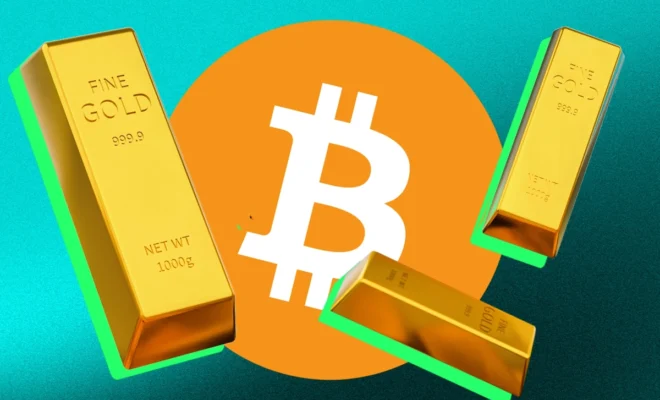
For thousands of years, physical gold has held an uncontested position as the ultimate store of value. It has survived the collapse of empires, outlived hundreds of fiat currencies, and provided a reliable hedge against inflation. However, the emergence of Bitcoin has introduced a modern challenger to this ancient status quo. Often referred to as digital gold, Bitcoin shares many of the fundamental characteristics that make gold valuable, while introducing unique structural improvements engineered for a digital global economy.
To determine whether Bitcoin truly functions as digital gold, investors must analyze its underlying value proposition, compare its physical and algorithmic mechanics, and assess how it performs within a diversified financial portfolio.
The Shared Foundations of Absolute Scarcity
The primary reason gold and Bitcoin are frequently compared is their shared reliance on scarcity. Unlike fiat currencies, which central banks can print in unlimited quantities, neither gold nor Bitcoin can be created out of thin air.
Gold is scarce because its abundance in the Earth crust is limited. Mining physical gold requires extensive labor, heavy machinery, and capital investment. Historically, the global above-ground supply of gold has grown at a highly predictable rate of roughly 1.5% to 2% per year.
Bitcoin achieves scarcity through mathematical governance. The Bitcoin network operates under a hard supply cap programmed into its code. There will only ever be 21 million Bitcoins in existence. New coins are introduced into circulation through a process known as proof of work mining, where global computer networks compete to solve complex cryptographic puzzles.
To ensure absolute scarcity over time, Bitcoin utilizes a mechanism known as the halving. Approximately every four years, the reward given to miners for validating transactions is cut in half. This programmatic reduction systematically chokes the incoming supply, making Bitcoin inflation rate entirely transparent and unalterable. While a sudden spike in gold prices can incentivize mining companies to increase exploration and expand production, no amount of market demand can ever increase the 21 million supply limit of Bitcoin.
Comparing Physical Properties and Digital Mechanics
To appreciate the value proposition of digital gold, it is useful to evaluate Bitcoin and physical gold across the traditional pillars of monetary utility. These characteristics include durability, divisibility, portability, and verifiability.
Durability and Maintenance
Physical gold is practically indestructible. It does not rust, corrode, or tarnish over centuries of storage. However, physical gold requires secure vaults, armed guards, and ongoing insurance costs to maintain.
Bitcoin possesses digital durability. It does not exist as a physical object that can burn or decay; instead, it exists as an immutable record distributed across thousands of independent global computers. As long as the global internet and the underlying blockchain network persist, Bitcoin remains intact. The primary burden of durability for Bitcoin shifts to the individual, who must safeguard private cryptographic keys against cyber theft or accidental loss.
Divisibility and Micropayments
Gold is difficult to divide cleanly into small fractions for everyday commerce. Shaving down a gold bar into precise increments requires melting facilities and specialized equipment, making small transactions highly impractical.
Bitcoin is natively divisible down to eight decimal places. The smallest unit of Bitcoin is called a satoshi, which represents one hundred-millionth of a single coin. This granular design allows users to send fractions of a cent or millions of dollars using the exact same software interface, making it universally adaptable to both massive institutional settlements and microtransactions.
Cross-Border Portability
Moving substantial amounts of physical gold across international borders is a logistical nightmare. It involves heavy armored transport, customs declarations, shipping fees, and significant delays.
Bitcoin completely detaches wealth from physical space. Because the asset resides on a decentralized ledger, a person can access their funds from anywhere in the world by utilizing a memorized seed phrase or a pocket-sized hardware wallet. Billions of dollars in Bitcoin can be transferred globally in minutes for a fraction of the cost of a traditional bank wire or physical gold shipment.
Instant Verifiability
Verifying the purity of gold requires chemical testing, assaying, or weighing, which leaves buyers vulnerable to sophisticated counterfeits like tungsten-filled bars.
Bitcoin resolves the verification issue instantly through open-source software. Every transaction is transparently recorded on the public ledger. Anyone running a standard Bitcoin node can independently verify the authenticity of the coins and the entire transactional history of the network within seconds, eliminating counterparty risk and fraud.
Market Capitalization and Liquidity Dynamics
The structural differences between these two assets translate directly into their market sizing and behavior during economic cycles.
| Attribute | Physical Gold | Bitcoin |
| Total Market Capitalization | Approximately 16 trillion dollars | Approximately 1.3 trillion dollars |
| Annual Supply Growth | 1.5% to 2.0% via extraction | Decreasing algorithmically toward 0% |
| Primary Use Cases | Jewelry, central bank reserves, electronics | Wealth preservation, global settlement |
| Institutional Accessibility | Spot markets, ETFs, physical bullion | Spot ETFs, corporate balance sheets, digital wallets |
The massive gap in market capitalization highlights the different stages of maturity for these two assets. Gold operates as a deeply established macro anchor with low structural volatility, heavily accumulated by central banks as an official reserve asset.
Bitcoin, with a fraction of gold market size, experiences wider price swings but offers asymmetrical growth potential. Because the liquidity pool of Bitcoin is smaller, capital inflows can cause rapid upward price movements, making it highly attractive to investors seeking explosive capital appreciation alongside wealth preservation.
The Evolution of Portfolio Dynamics
In modern wealth management, the relationship between gold and Bitcoin has shifted from a fierce competition to a symbiotic partnership. Financial institutions increasingly implement a barbell strategy, using both assets to hedge different types of macroeconomic risk.
Gold thrives in environments defined by severe geopolitical conflict, systemic banking failures, and acute flights to safety. When global equities collapse due to immediate panic, gold acts as a traditional defensive anchor.
Bitcoin exhibits high correlation with expanding monetary liquidity and technological adoption. While it maintains safe-haven properties over multi-year horizons, it often trades as a high-beta risk asset during short-term market corrections. However, statistical data demonstrates that while Bitcoin may underperform gold during the initial days of a global macroeconomic shock, its recovery and subsequent performance over a multi-month window frequently outpaces traditional commodities.
By holding both physical gold and Bitcoin, investors create a balanced defensive profile. Gold provides a steady, non-digital baseline that carries zero network dependence, while Bitcoin provides an aggressive, highly portable growth engine optimized for an increasingly digitalized global financial system.
Frequently Asked Questions
Does Bitcoin possess any intrinsic value like the industrial use cases of gold?
Bitcoin value does not stem from physical utility or industrial application. Instead, its value is derived from the utility of its network architecture. The ability to trustlessly transfer unconfiscated wealth across the globe without relying on a bank, government, or central clearinghouse is a highly valuable service. The intrinsic value of Bitcoin lies in its secure, decentralized infrastructure and its absolute mathematical scarcity.
How does the energy consumption of Bitcoin mining compare to the environmental footprint of gold?
Both assets require significant energy expenditure to establish their scarcity, preventing the currency from being debased. While Bitcoin mining relies on electricity to power cryptographic computational networks, global research indicates that over half of this energy is sourced from renewable or stranded power supplies. Conversely, physical gold mining requires heavy machinery, extensive land excavation, deforestation, and chemical processing, which generates a massive, irreversible impact on local ecosystems.
Can a government ban or shut down the Bitcoin network entirely?
A government can pass laws banning domestic citizens from trading or owning Bitcoin, but shutting down the network itself is virtually impossible. Because the software operates across a decentralized, global peer-to-peer network of thousands of independent nodes, there is no central server, corporate headquarters, or single point of failure to target. As long as internet connectivity or basic radio communication exists somewhere on Earth, the network will continue to process blocks.
What happens to the Bitcoin network when all 21 million coins are fully mined?
The final fractions of Bitcoin are projected to be mined around the year 2140. Once the block reward subsidy drops to zero, miners will be compensated entirely through transaction fees paid by users. As Layer 2 scaling protocols handle high-velocity retail transactions, the main base layer blockchain will function primarily as a high-value settlement network for banks, corporations, and sovereign states, ensuring transaction fees remain robust enough to incentivize network security.
How do spot Bitcoin exchange-traded funds alter the digital gold thesis?
The approval and widespread integration of spot Bitcoin exchange-traded funds (ETFs) bridge the gap between traditional finance and digital scarcity. These investment vehicles allow pension funds, regular brokerages, and institutional portfolios to gain direct exposure to Bitcoin price movements without managing cryptographic private keys. This institutional onboarding dampens retail-driven volatility and mirrors the historic growth trajectory seen after the launch of the first physical gold ETFs in the early 2000s.
Is Bitcoin vulnerable to being replaced by a newer, more advanced cryptocurrency?
While thousands of alternative cryptocurrencies exist with faster processing speeds or complex smart contract capabilities, none have matched the decentralized network security and established liquid trust of Bitcoin. Bitcoin benefits from a powerful first-mover advantage and an immutable focus on simplicity and security over feature complexity. Altering its foundational traits requires a consensus among global users, making it resistant to speculative technological obsolescence.